The work has three movements. We don’t march through them in order. We circle back to each one as your life hands us material.
1. Capacity. Most men have a nervous system built for getting through hard things and not much else. We widen it with breathwork, qigong and interoception, which means learning to feel what’s actually happening in your body without immediately doing something about it. Capacity is what lets you stay present when a conversation gets hot, when a deal falls through, or (often harder) when something goes right.
2. Programming. Once there’s more room in you, we look at the strategies you’ve been running: the approval-seeking, the sprint and crash, the way you go quiet or go hard. We look at them slowly, in meditative states, where you can see them as strategies rather than as who you are.
3. Practice. Insight that stays in your head fades by Thursday. So we practice the new way of being in session, in simulation, and then in your actual week, until it lives in your body and not just your notes.
—
Here are two things I teach almost every man I work with:
Feel it and own it. Don’t make yourself bad. Don’t take yourself out. When something hard lands (you snapped at your kid, you didn’t prepare enough for the meeting), there are usually two moves on offer. Deny it: toughen up and move on. Or collapse into it: shame, self-punishment, disappear for the evening. Both are ways of leaving. The third option is to feel it fully, own it plainly, and stay in. (That middle line I owe to Sutcliffe.) And for the partnered men: your lover wants you to feel it and own it. They don’t want to have to mother you.
Some things in life are not solvable, only livable. Pain and suffering aren’t the same thing. Shinzen Young puts it as a formula: suffering equals pain multiplied by resistance. A lot of what we do together isn’t fixing the pain. It’s working with the resistance, which turns out to be the part you can actually change.
(There’s a sample recording below.)
—
What changes
I won’t promise you a transformation. I’ll tell you what this tends to look like in ordinary life.
- Your partner says the thing that usually starts the fight. You notice the heat in your chest, you feel it, and you get curious about what’s actually going on instead of trying to win.
- In a hard meeting you can disagree without shrinking or puffing up. You say what’s true, and you’re still there afterward.
- A quiet Tuesday night with nothing to fix doesn’t make you restless. You can rest without earning it first.
- Something good happens, like a win, a compliment or a tender moment, and you let it land instead of bracing for what’s next. Most of us are built to survive hard things and are quietly terrified of what will happen if things turn out right. We build capacity for that too.
- You stop swinging between toughing it out and falling apart. There’s a third place to stand.
It’s slower than performing, and that’s uncomfortable at first. Then you notice there’s real nourishment in it.
NOURISHMENT. Your world is full of nourishment you haven’t learned to receive yet.
—
Why one-to-one
Books, courses and group programs are good at information. This work is experience, and experience needs a real relationship.
- It’s small. I work with very few men at a time. I know your life, not your avatar.
- It’s relational. Part of what changes a man is being met by another man without needing to perform for him.
- It’s practice-based. We do stuff. We don’t just talk. “Embodied” practice because your nervous system is a half-a-billion year old genius.
- It’s honest. I’ll tell you what I see, plainly and without drama. You’re welcome to tell me I’m wrong.
- It’s sacred. What you bring stays between us. I treat our time as a sacred container.
—
Is this for you?
This is for you if:
- You’re tired of performing, even though you’re good at it.
- You’re willing to slow down, feel things, and be a beginner again.
- You can stand to be seen before you’ve cleaned yourself up.
- You’re drawn to depth, whether your language for it is Christian, Buddhist, secular or still forming. This is a way of living, not a religion. Nobody’s converting anybody.
This probably isn’t for you if:
- You’re mostly looking for someone to agree with you.
- You’re in acute crisis or need trauma treatment. Please start with a licensed therapist. I’m glad to work alongside one.
- You don’t care if you grow or not. You have nothing at stake. Not a bad place to be, but not who I work with.
—
How it works
- Length: 90 days minimum
- Rhythm: three weeks on, one week off, for three months. That’s nine sessions, with a week each month for things to settle.
- Sessions: 60 to 90 minutes over Zoom, one per on-week, at a regular time we set together.
- Between sessions: text and voice-note access to me. We save most things for the call, but you’re not on your own when something hits midweek.
- Practices: recorded practices to use on your own, including a short daily morning practice you can keep running long after our 90 days.
- Scheduling and invoicing: my assistant handles both, so our time stays about the work.
- Missed sessions: Give me 24 hours’ notice and we’ll reschedule that shiiit.
- After 90 days: some men keep going, some come to a retreat for a tune-up, some are done for now. All three are good outcomes.
—
Investment
$2,200 for the full 90 days.
Payment plan available. Some clients cover this as a professional development expense.
—
How to begin
I don’t do sales calls. I do a discernment call: [30] minutes to see whether this is the right work, at the right time, with the right person. Sometimes it is. Sometimes I’ll point you somewhere better.
If you’d like a taste first, here’s a 7-minute practice I use with clients. Do it once, and notice what’s different afterward. [Practice recording]
—
What men say
“My wife says she’s seen a huge difference in me. We’re more connected than we’ve been in quite some time. A lot of it was just a shift in perspective. It was all there before, I just wasn’t grateful enough to stand back and look. I’ve learned I don’t need to intellectualize everything, give an answer, or solve the problem. I take things as ‘I get to,’ not ‘I have to.’ Chase is the guide.”
~ Marc H.
(More testimonials below)
—
About me
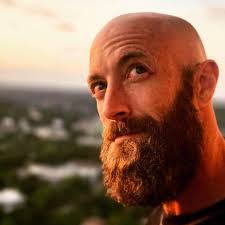
I’m Chase. I’ve been a pastor (still kind of am) and I’m a teacher, a dad, and a man who spent a long time being very good at performing.
For years I used seduction and performance, and it worked. People liked me, and I thought that was intimacy. What finally changed things and got me out beyond the despair and denial was learning to show up as my human self and let that be enough.
Sounds dumb. Legit changed my life.
These days I practice what I teach: breathwork, sauna, tea, practice-based men’s groups, men’s growth programs, parenting well, growing businesses. I draw on teachers across traditions, from the gospels to Hebrew wisdom literature and Buddhist teachers like Shinzen Young and Chögyam Trungpa to the elders of men’s work. I try to be generous toward all of them and honest about what each one can and can’t do.
I also review backpacks on YouTube. Different lane.
—
Questions
Is this therapy? No. I’m not a licensed therapist, and this isn’t treatment. Plenty of men I work with are also in therapy, and the two work well together.
Do I have to be religious? No. I’m a pastor, and now and then I’ll borrow a story from the gospels because they’re full of good ones. A Christian, a Buddhist and a guy who’s never thought about any of it should all feel at home here.
I’ve never done breathwork or meditation. Is that a problem? No. You’ll start at the beginning with no bad habits to unlearn. We go at your nervous system’s pace, not mine.
Is it all on Zoom? Yes. You’ll want a private space where you can move a little and breathe out loud without explaining yourself to anyone.
What happens after the 90 days? We’ll talk about it near the end. We don’t have to stop.
Is what I share confidential? Yes. We can formalize it with an NDA i have on hand 
Is this only for men? I mean, i’m up for it depending on how the discernment call goes.
I read all the way to the bottom here. What does that say about me? Well, you like what you see. You’re curious and feel in some way met by me. You’re interested but likely worried whether the money will be well spent. Book the call and see.

“Chase engages with ideas and feelings like no other person I have met or worked with.”

“Chase has done the work on himself — and continues to evolve — which gives him a refined ability to help others on the path.”
“I really appreciate how Chase always challenges me to dig deeper into my ‘under the rug’ stuff.”
“Chase is realer than just about any other man in the space because he speaks from real experience.”